
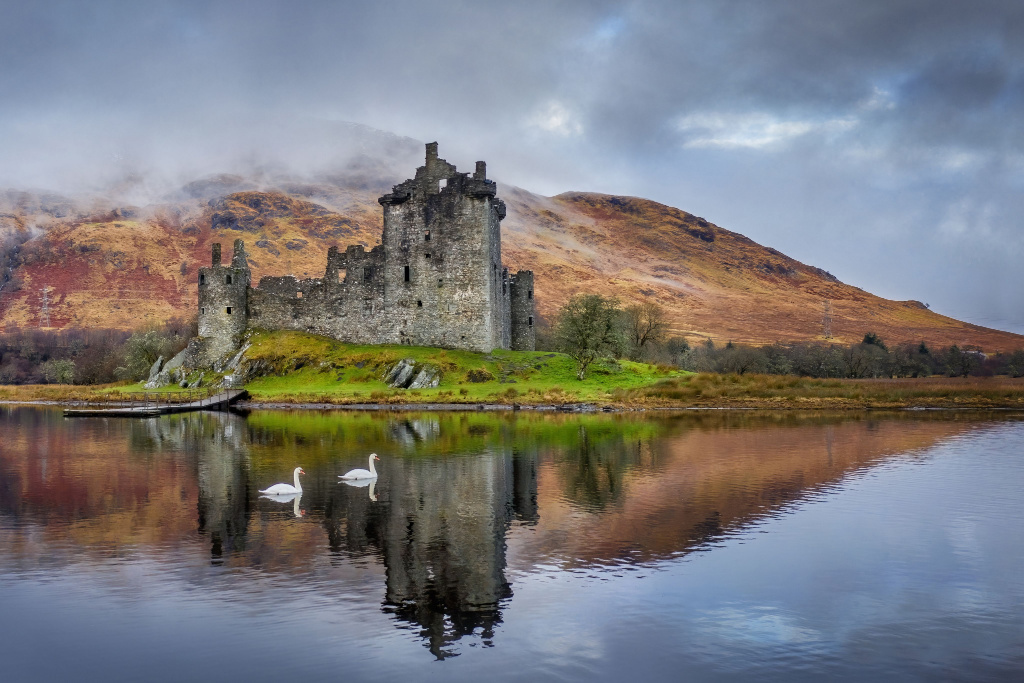

The Most Dramatically Situated Ruin in Scotland
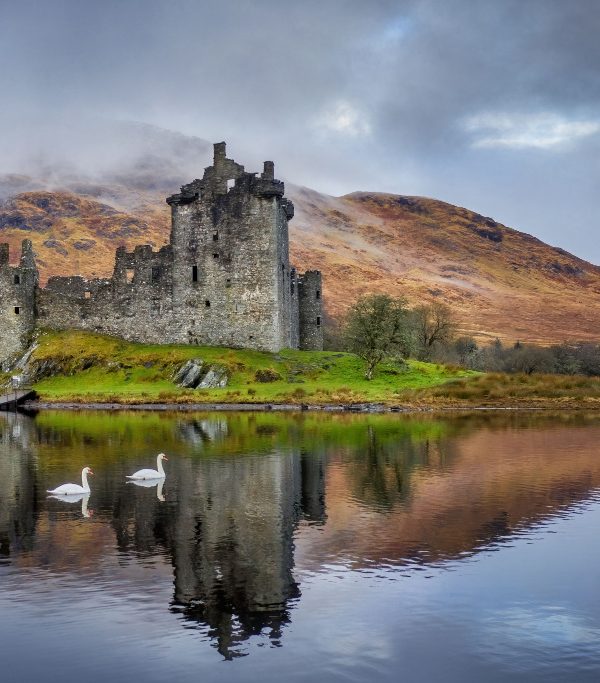
If you’re going to have a ruined castle, you might as well have it perched on a rocky headland above the most famous and most mysterious loch in the world. Urquhart Castle, occupying a commanding promontory above Loch Ness in the Great Glen of Scotland, combines a rich and turbulent history, dramatic ruined architecture, and one of the most spectacular natural settings in Europe. The views from the castle walls across the deep, dark waters of Loch Ness, framed by the steep hills that rise on either shore, are simply breathtaking at any time of year and in any weather — though a castle with a resident legend as compelling as Nessie has a particular magic on misty days when the loch’s surface is broken only by the occasional ripple of unexplained origin. Urquhart is the second most visited castle in Scotland, and it fully earns its place on every visitor’s itinerary.
A Thousand Years of History
The strategic importance of Urquhart’s position on the western shore of Loch Ness — controlling movement through the Great Glen, the great natural corridor that divides the Scottish Highlands — ensured that a fortification of some kind has stood here for well over a thousand years. Archaeological evidence suggests that the site was occupied as far back as the Iron Age, and there may have been a Pictish fortification here in the early medieval period. The castle’s recorded history begins in earnest in the 13th century, when it was held by Alan Durward, a powerful Scottish nobleman. Over the following two centuries, Urquhart was caught up in the Wars of Scottish Independence, changing hands repeatedly between Scottish and English forces and suffering considerable damage in the process.
The Castle’s Final Days
Urquhart’s long and violent history drew towards its close in the 17th century. The castle had been held by government troops during the turbulent Covenanting period and the early Jacobite risings, and in 1692, following the end of the most recent Jacobite occupation, the government forces withdrew and blew up the gatehouse to prevent the castle from being used as a future stronghold. This act of deliberate demolition, combined with the natural forces of wind, weather, and stone-robbing by local builders over the following century, reduced Urquhart to the romantic ruin we see today. A particularly severe storm in 1715 brought down the great tower’s wall, creating one of the most dramatic architectural fragments in Scotland.
What Survives
Despite its ruinous state, a considerable amount of Urquhart survives to give visitors a clear sense of the castle’s former extent and importance. The Grant Tower — the last major addition to the castle, built in the 16th century — stands to near its full original height and can be ascended for extraordinary views over the loch and surrounding landscape. The nether bailey, with its various domestic buildings and the great hall range, can be traced in the surviving walls and foundations, and the outlines of the upper and lower wards give a clear impression of the site’s considerable size. Informative interpretation throughout the site helps visitors understand the castle’s complex architectural history. A full-scale reconstruction of a trebuchet — a medieval siege weapon — adds a particularly dramatic element to the visitor experience.
The Loch Ness Monster
No visit to Urquhart Castle would be complete without acknowledging the world-famous legend that has made the surrounding loch one of the most celebrated bodies of water on earth. Reports of a large, mysterious creature in Loch Ness stretch back to the 6th century, when Saint Columba is said to have encountered a strange beast in the River Ness. But it was a photograph taken in 1934 — later shown to be a hoax, though a remarkably convincing one for its time — that launched Nessie into global fame. The excellent Loch Ness Centre at Drumnadrochit, just a short distance from the castle, provides a thorough, balanced, and thoroughly entertaining account of the legend and the scientific investigations it has inspired.
The Visitor Experience
Urquhart Castle is managed by Historic Environment Scotland and welcomes hundreds of thousands of visitors every year. The visitor centre at the entrance to the site is excellent, housing a permanent exhibition on the castle’s history and an impressive collection of artefacts recovered from excavations on the site. A short film provides a useful introduction to the castle’s history and is particularly helpful for younger visitors. From the visitor centre, a path descends to the castle itself, with views of the ruin and loch opening up gradually as you descend — a well-managed approach that builds excitement effectively. The site is open year-round, though it can be very busy during the summer months, and early morning or late afternoon visits offer both better crowd conditions and more atmospheric light for photography.
Getting There and Practical Information
Urquhart Castle is located on the A82 road, approximately 3 kilometres south-east of Drumnadrochit on the western shore of Loch Ness, about 25 kilometres south of Inverness. By car from Inverness, the journey takes around 30 minutes along a scenic lochside road. Bus services run from Inverness to Drumnadrochit and on to the castle. Combined tickets covering both Urquhart Castle and the Loch Ness Centre in Drumnadrochit represent good value and allow a comprehensive half-day exploration of both the castle and the legend. Waterproof clothing is strongly recommended regardless of the forecast — Loch Ness has a microclimate all its own, and the wind on the exposed castle promontory can be fierce. The views, however, make every moment of discomfort entirely worthwhile.