

Aberdeenshire’s Hidden Treasure
Of all Scotland’s many magnificent castles, few are as rewarding and as persistently underrated as Fyvie. Tucked away in the gentle rolling countryside of Aberdeenshire, this enormous baronial pile represents one of the finest and most complete examples of Scottish castle architecture anywhere in the country. Unlike many of Scotland’s great historic houses, which have been converted into hotels or broken up into flats, Fyvie is maintained in its historic integrity by the National Trust for Scotland and offers visitors an almost unparalleled opportunity to explore the authentic interiors of a great Scottish castle. With over a thousand years of history embedded in its stones, a collection of Scottish portraiture that ranks among the finest in the world, and more than a few resident ghosts, Fyvie is a place that consistently surprises and delights the visitors who make the effort to seek it out.
Five Families, Five Towers
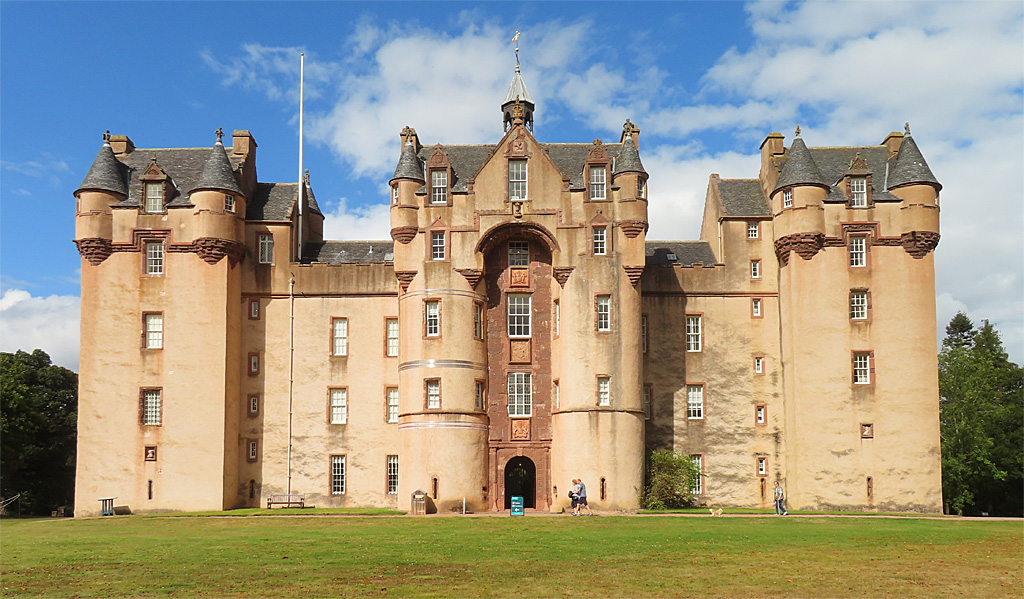
Fyvie Castle’s architectural history is unique in Scotland, shaped by a legend that is as charming as it is historically revealing. The castle’s extraordinary façade features five towers, each named after one of the five powerful families that owned the estate across the centuries: the Prestons, the Meldrums, the Setons, the Gordons, and the Leiths. Each family, the story goes, built their tower as a statement of ownership and identity, and the result is a building whose physical form is inseparable from its social history. The current appearance of the castle is largely the result of Alexander Seton’s remodelling at the turn of the 17th century, which created the magnificent entrance façade with its great wheel stair — one of the finest examples of this characteristically Scottish architectural form.
The Architecture
Fyvie’s exterior is an extraordinary piece of architectural theatre. The entrance front is dominated by three great towers connected by a long curtain wall, with a profusion of dormer windows, sculptural decoration, and heraldic devices that speak eloquently of the wealth and ambition of the families who built and embellished it over the centuries. The building is constructed of warm sandstone that glows richly in afternoon light, and the overall impression is of a building of great dignity and confidence. The great wheel stair — the largest of its kind in Scotland — ascends through the building in a magnificent helical sweep, its central pier decorated with carved heraldic emblems. It is a genuinely awe-inspiring piece of Renaissance engineering and design that alone would justify a visit to Fyvie.
The Art Collection
The real revelation at Fyvie for many visitors is the quality and depth of its art collection. The castle houses an outstanding collection of Scottish portraits accumulated by Alexander Forbes-Leith, the last private owner of the estate, who amassed one of the finest private collections of Scottish art in the country. Works by Henry Raeburn, John Hoppner, and other leading portraitists of the 18th and 19th centuries line the castle’s walls, depicting the great and good of Scottish society across several generations. The collection provides a fascinating visual history of Scottish aristocratic life and is presented in rooms whose historic furnishings and decorative schemes provide an entirely appropriate context.
Ghosts and Legends
No account of Fyvie would be complete without mention of its substantial supernatural reputation. The castle is said to be haunted by several ghosts, most famously the Green Lady — the spirit of Lilias Drummond, wife of the first Seton owner of the castle, who is said to appear in times of distress. The name “Lilias Drummond” is reportedly inscribed on a window sill in the castle, carved — according to legend — by her anguished ghost on the night of her death. Another spirit, the Weeping Lady, is said to haunt the upper floors. Whether or not you credit these tales, they add a pleasantly atmospheric layer to a visit and speak to the depth of history embedded in the castle’s stones.
The Grounds and Lake
Beyond the castle walls, the Fyvie estate offers beautiful grounds well worth exploring. The formal walled garden, dating from the 18th century, has been thoughtfully restored and includes kitchen garden sections, ornamental planting, and a pleasant tearoom in the old steading buildings. The artificial loch created by the Seton family in the early 17th century provides a picturesque foreground for views of the castle and is home to a variety of waterfowl. The wider estate encompasses parkland and woodland through which several walking trails have been laid out, making Fyvie an ideal destination for a full day’s outing that combines cultural interest with gentle outdoor activity.
Getting There and Visiting
Fyvie Castle is located about 40 kilometres north of Aberdeen, just off the B9005 road near the village of Fyvie in Aberdeenshire. By car from Aberdeen, the drive takes around 45 minutes through pleasant agricultural countryside. The castle is a National Trust for Scotland property and is open seasonally, with reduced opening in winter months. National Trust members receive free entry. The castle and grounds together make for an excellent half-day or full-day outing, and Fyvie is well placed on the Aberdeenshire Castle Trail, making it easy to combine with visits to other nearby properties such as Haddo House, Tolquhon Castle, or the remarkable gardens at Pitmedden.