

A Castle That Defines a City
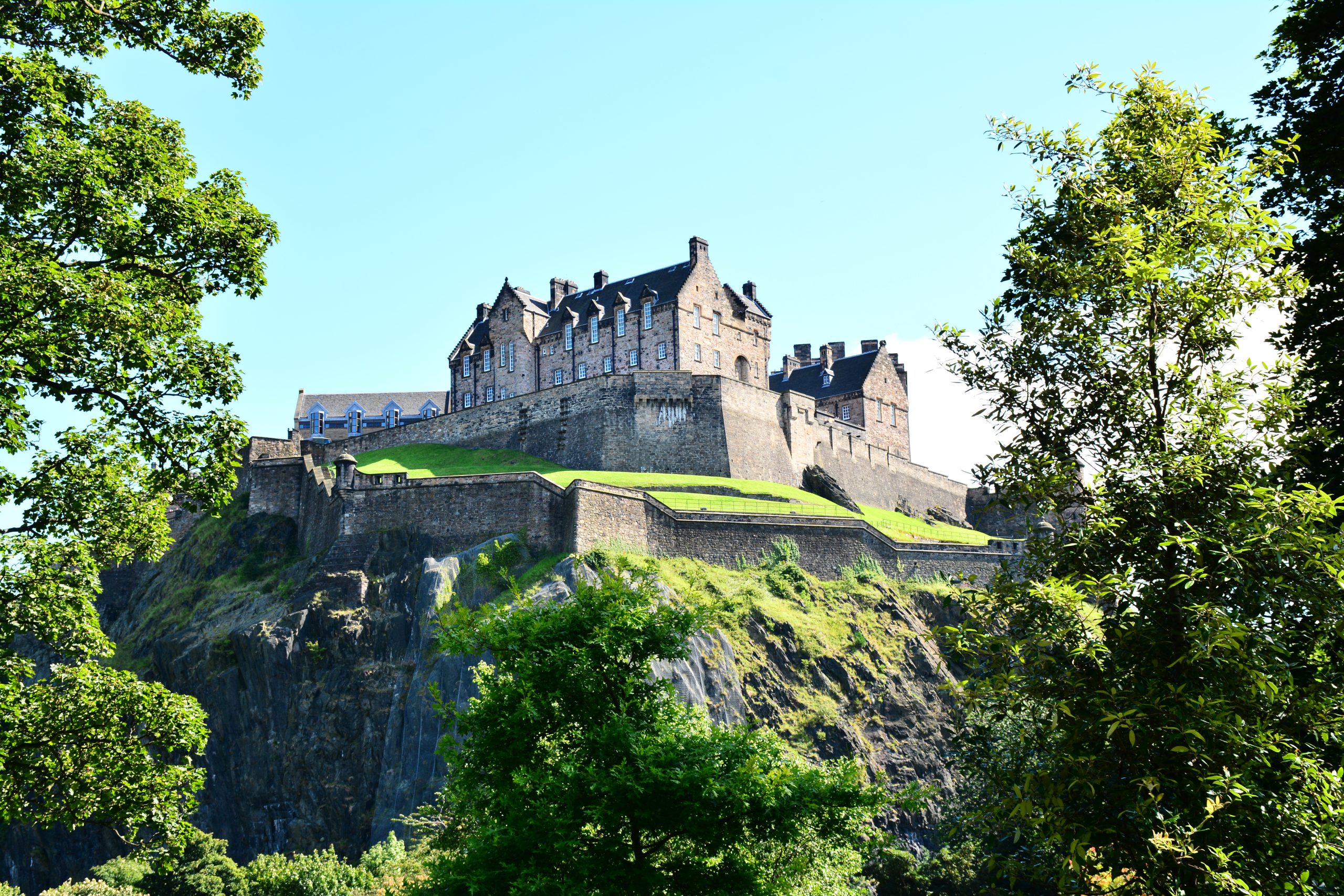
There are castles, and then there is Edinburgh Castle. Perched on the plug of an ancient volcanic rock that rises dramatically from the centre of Scotland’s capital city, this vast fortress has dominated the Edinburgh skyline for over a thousand years. It is simultaneously a military stronghold, a royal residence, a national memorial, and Scotland’s most visited paid tourist attraction. Whether you’re approaching on foot up the Royal Mile, gazing up at it from Princes Street Gardens below, or catching your first glimpse of it from the window of an incoming flight, the impact of Edinburgh Castle is immediate and total. It is, without question, one of the most dramatically situated buildings in Europe, and no visit to Scotland is complete without a day spent exploring its extraordinary layered history.
The History of the Rock
Human settlement on Castle Rock almost certainly predates any written record, but the earliest reliable historical references to a royal fortress here date to the 12th century. David I of Scotland held court at the castle in the 1100s, and over the following centuries the fortress served as both a royal residence and a military stronghold of enormous strategic importance. It has been besieged, captured, and recaptured numerous times over its long history, playing a significant role in some of the most dramatic episodes of Scottish history including the Wars of Independence, the reign of Mary Queen of Scots, and the Jacobite risings of the 18th century. The castle’s volcanic rock foundation, with sheer cliffs on three sides, made it one of the most formidable defensive positions in the British Isles.
The Crown Jewels and the Stone of Destiny
Among Edinburgh Castle’s many remarkable treasures, none draws more visitors than the Scottish Crown Jewels — known as the Honours of Scotland — and the Stone of Destiny. The Crown Jewels, comprising the crown, sceptre, and sword of state, are the oldest surviving royal regalia in Britain, dating from the 15th and 16th centuries. Their story includes a period of concealment following the Act of Union in 1707, when they were locked in the Crown Room and forgotten for over a century before being rediscovered by a group that included the novelist Sir Walter Scott in 1818. The Stone of Destiny, a roughly hewn block of red sandstone with a deeply symbolic role in Scottish coronation ceremonies, was returned to Scotland from Westminster Abbey in 1996 after an absence of over 700 years.
The Great Hall and St Margaret’s Chapel
The castle’s interior encompasses dozens of historic buildings spanning nearly a thousand years of construction. The Great Hall, built around 1510 for King James IV, is the finest medieval secular building on the castle rock, its magnificent hammer-beam roof soaring above a space used for royal banquets, parliaments, and later as a military hospital and barracks. St Margaret’s Chapel, by contrast, is the oldest surviving building on the site and the oldest building in Edinburgh, dating from around 1130. Dedicated to Queen Margaret of Scotland, this tiny, beautiful Romanesque chapel has an intimacy and simplicity that provides a remarkable contrast to the castle’s grander later buildings.
The One O’Clock Gun
One of Edinburgh Castle’s most enduring traditions, and one that takes many first-time visitors by complete surprise, is the daily firing of the One O’Clock Gun. At exactly 1pm on every day except Sunday, Good Friday, and Christmas Day, a cannon on the castle’s Half Moon Battery is fired with a resounding boom that echoes across the city below. The tradition dates from 1861 and was originally intended as a time signal for ships in the Firth of Forth. Today, it serves primarily to delight tourists and startle unsuspecting pigeons, but it remains a genuinely charming piece of Edinburgh’s daily life and a reminder of the castle’s enduring presence in the rhythm of the city.
The Edinburgh Military Tattoo
Every August, Edinburgh Castle becomes the spectacular backdrop for one of the world’s most famous outdoor events. The Royal Edinburgh Military Tattoo, performed on the castle’s esplanade, brings together military bands, display teams, and performers from around the world for a three-week run of spectacular evening shows. With the illuminated castle rising behind the performers and the sounds of massed pipes and drums filling the night air, the Tattoo is an experience of extraordinary theatrical power that regularly draws audiences of over 200,000 people. Tickets sell out well in advance, so if you’re planning a visit during August, book as early as possible.
Practical Tips for Visitors
Edinburgh Castle is open year-round, though hours vary seasonally. The entrance is at the top of the Royal Mile via the castle’s Esplanade, and advance online booking is highly recommended to avoid queues, particularly during the busy summer months. The site is large — allow at least three hours for a comprehensive visit — and the terrain involves considerable walking over uneven ground, including some steep inclines. Audio guides are available and provide excellent commentary on the castle’s many buildings and stories. There is a café and a restaurant on site, as well as an excellent gift shop. The views from the castle walls over the city and across to the Firth of Forth and the hills of Fife are extraordinary at any time of day, but particularly magical around sunset.